
On a quiet street in Austin’s Hyde Park Historic District, a 1939 bungalow sits beneath the wide canopy of two mature pecan trees. In the afternoon, the backyard fills with soft shade and the easy rhythm of neighborhood life—gardens, bicycles, and the gentle pace that makes this pocket of the city feel almost timeless.
For designer Ali Burgoon, the home became more than a renovation. It was an excavation of sorts—an opportunity to uncover the character quietly waiting beneath layers of drywall and time. Longleaf pine shiplap emerged. Transom windows returned light to the corridor. Vintage pieces and William Morris wallpapers helped restore a sense of history that had softened over the decades.
The project ultimately became the catalyst for launching Studio Burgoon, Burgoon’s residential design studio devoted to thoughtful homes that honor architectural history while supporting modern life. We spoke with her about restoring the Hyde Park bungalow, designing a home for herself, and the philosophy guiding her work today.
Tell us a little about yourself and how Studio Burgoon came to be.
I began my career over a decade ago designing boutique hospitality spaces at firms like The Gettys Group, Gensler, and Bunkhouse Group, where I developed a strong technical foundation and a deep appreciation for creating immersive, story-driven environments. Over time I found myself increasingly drawn to the intimacy of residential design—spaces that reflect the history of a home and the lives of the people within it. That shift crystallized during the renovation of my own 1939 bungalow in Austin’s Hyde Park Historic District, where I approached the project as an excavation of sorts, restoring longleaf pine shiplap, adding period-appropriate transom windows with restoration glass, and layering in vintage pieces and William Morris wallpapers to bring the home’s character back to life. The project became both a personal and professional turning point, ultimately leading me to launch Studio Burgoon in 2023. Today the studio focuses on thoughtfully crafted residential homes that honor architectural history while creating spaces that feel deeply personal, livable, and enduring.
You design homes for clients all over, but this Hyde Park house is your own. What was it like designing for yourself—freeing, overwhelming, or a little of both?
Designing my own home was incredibly joyful—it gave me the opportunity to fully immerse myself in the process and listen closely to what the house wanted to become in its next chapter. With renovations in particular, I tend to let the existing architecture guide the process; the bones of the home often determine many of the design decisions. It’s less about imposing my own vision and more about being a thoughtful steward of the building—studying what’s already there, honoring its history, and allowing those discoveries to shape the new iteration. In this bungalow, moments like uncovering the original longleaf pine shiplap or introducing period-appropriate transom windows helped steer the direction of the project. The result is a home that feels authentic to its era, while still functioning beautifully for modern life.
Hyde Park has so much character and history. What drew you to this particular home, and what did you notice about it right away?
We were immediately drawn to the lot—it has two beautiful mature pecan trees in the backyard that cast the most wonderful shade, a must to get through Austin summers. The home itself had been owned by a woman who lived here for nearly fifty years, so while it was clearly lovingly lived in, many of the core systems—roof, electrical, HVAC—were all nearing the end of their life. As a designer, that was actually quite appealing because it meant I was starting with a true blank slate rather than inheriting someone else’s design decisions. What stood out right away was that the house had great bones and an incredible sense of warmth and energy. We also loved that the lot allowed us to add a thoughtful two-story addition appropriate for the historic neighborhood while still preserving generous outdoor space for a garden and an outdoor kitchen, which ultimately became an important part of how we envisioned living here.
When the project began, what did you know you wanted to protect or preserve about the house—and where did you feel open to change?
From the beginning, we knew we wanted to preserve the integrity and spirit of the original house while making it function better for how we live today. The biggest change was reconfiguring the layout so the kitchen, dining, and living spaces moved to the back of the home, creating a stronger connection to the backyard for everyday living and entertaining. That shift transformed how the house flows, but it also created an opportunity to thoughtfully augment what was already there and infuse even more character into the home. We were intentional about preserving elements like the original oak floors and exposing the longleaf pine shiplap we discovered behind the drywall. We also added transom windows along the central corridor to bring in natural light—a detail that would have been very common in homes of this era. Other elements, like tile, millwork, and cabinetry, are new, but each decision was informed by the time period and the context of the neighborhood so the additions feel as though they could have always belonged here.
The house feels layered and collected, with a mix of vintage pieces, custom work, and history. How do you create a home that feels curated but still relaxed and livable?
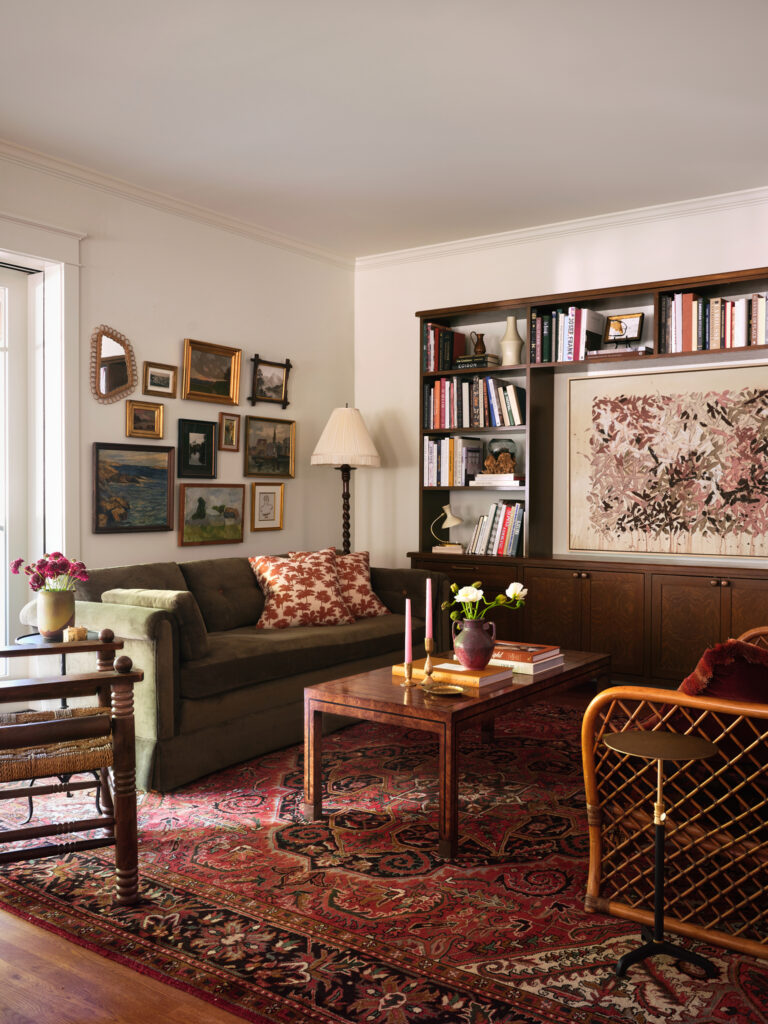
For me, it starts with restraint and intention. I like a home to feel layered and collected over time rather than overly decorated all at once. Mixing vintage pieces with custom work is an important part of that—vintage brings a sense of history and soul, while custom elements allow us to tailor the space to how it’s actually lived in. And of course, livability is always the priority—durable fabrics, comfortable seating, and layouts that support everyday life. When those practical considerations are paired with thoughtful details and meaningful pieces, the result feels curated but still relaxed and natural to live in.
The layout was reworked to better suit daily life and entertaining. How did the way you actually live in the home influence those decisions?
How we actually live day to day played a huge role in the layout decisions. We love to cook and entertain, so it felt important that the kitchen, dining, and living spaces were connected and oriented toward the backyard. By moving those public spaces to the back of the home, we created a much stronger indoor–outdoor relationship, which makes hosting feel very natural—people can gather in the kitchen, move out to the garden, or linger at the dining table without the house ever feeling segmented. We also introduced a side entry with a mudroom, which you reach by walking through the garden. It’s become one of my favorite daily rituals—passing by the raised beds, seeing butterflies, and checking on the plants as we come and go. Those kinds of small, everyday moments were just as important to us as entertaining, so the reconfiguration was really about creating a home that supports both daily life and gathering with friends.
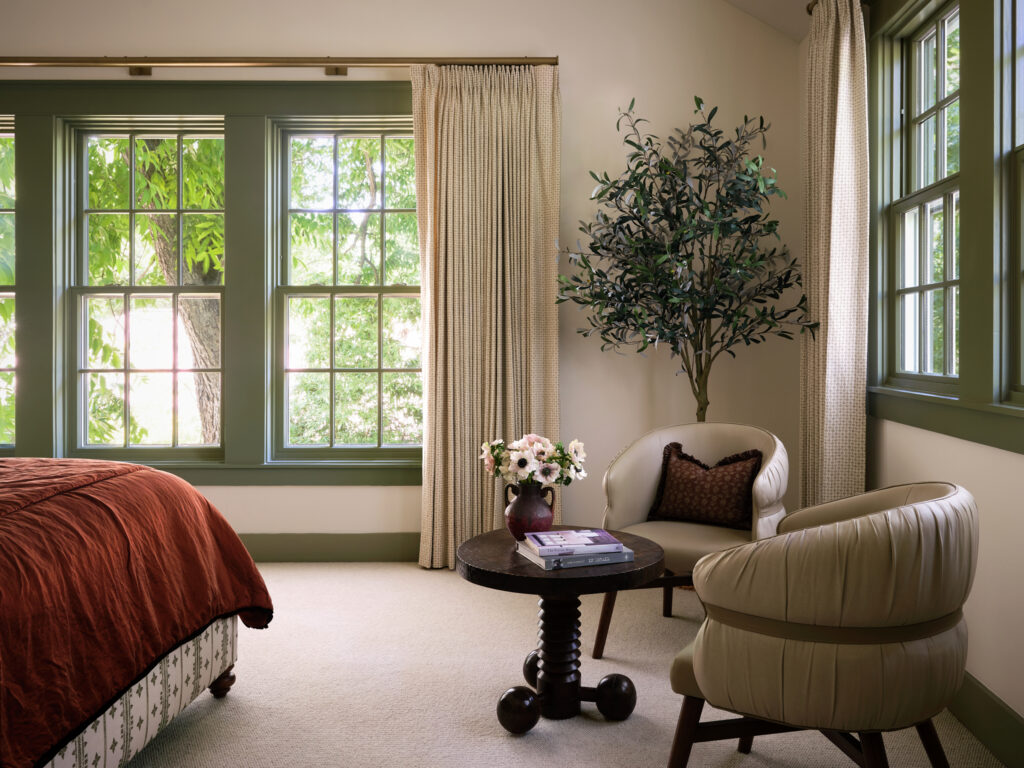
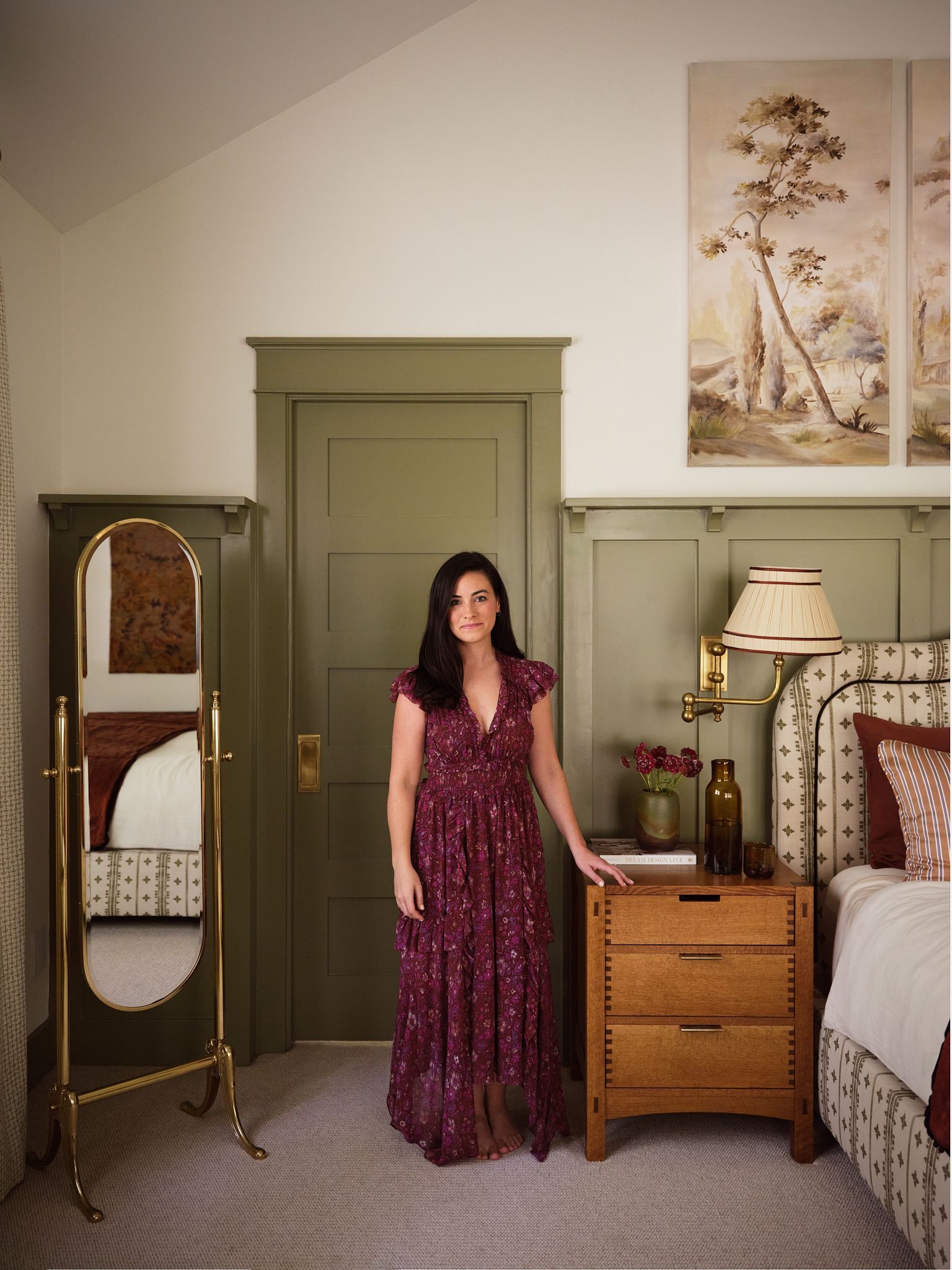
Your primary suite feels like a real retreat. Was there a particular mood or feeling you wanted that space to have?
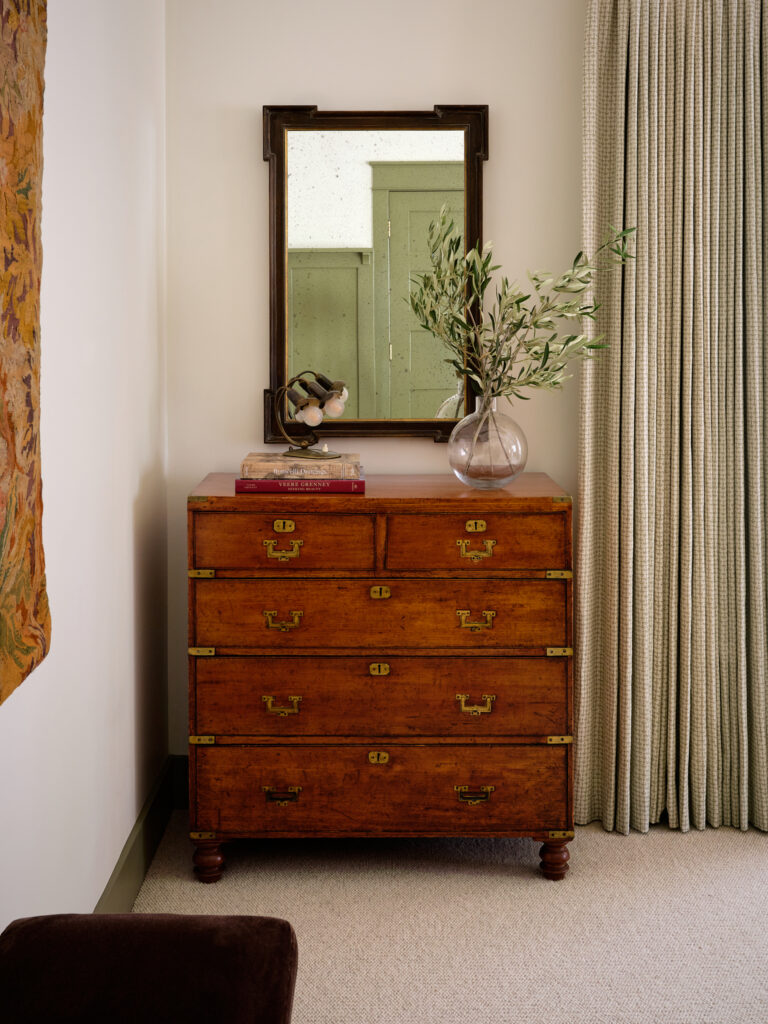
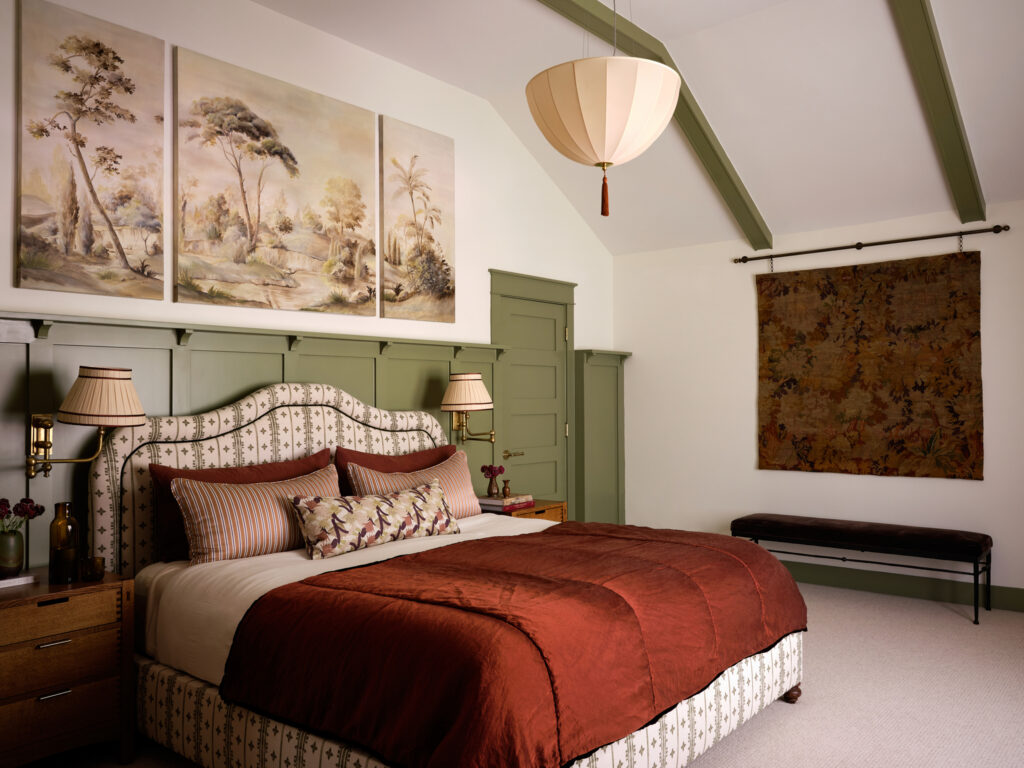
We wanted the primary suite to feel like a quiet retreat—almost like a serene treehouse tucked into the canopy of the backyard. Because the room sits on the second floor overlooking the pecan trees, there’s this beautiful sense of being surrounded by greenery, which naturally lends itself to a calm, restorative atmosphere. At the same time, we wanted the space to feel deeply personal and a bit nostalgic. The commissioned mural above our bed was inspired by Florence and Rome, where my husband and I studied abroad, as well as the desert landscapes of Palm Springs where we were married. The campaign dresser was inspired by one we had in our hotel room during a life-changing trip to Tanzania. There are so many small moments in the room that reference places that are meaningful to us, so while the overall feeling is very serene, it’s also layered with memories and pieces that tell our story.
This home strikes a balance between honoring the past and feeling fresh and current. How do you approach that balance—especially in historic Austin homes?
For me, it always begins with studying the architecture and understanding what makes the home special. In historic Austin homes, there’s often a clear language already present—proportions, materials, millwork details—and I try to let those cues guide the design rather than impose something unrelated. That might mean restoring original elements where possible or introducing details that feel period appropriate, even if they’re newly built. At the same time, the home still needs to support modern life, so the layout, lighting, and functionality are thoughtfully updated. When that balance is right, the house doesn’t feel like a strict preservation project or a completely new intervention—it simply feels authentic, as though the home has evolved naturally over time.
As Studio Burgoon continues to grow, what kinds of projects are you most excited to take on next?
I’m especially excited to continue working on historic renovations—homes that already carry a sense of history and character and simply need thoughtful stewardship to bring them into their next chapter. I love the process of studying the architecture, uncovering original details, and carefully layering in materials and craftsmanship so the home feels authentic rather than newly imposed. I’m also very eager to take on more second-home projects. My background in hospitality design naturally lends itself to those spaces because they’re often about creating a sense of escape and experience—places where families gather, relax, and make lasting memories. Projects like lake houses, mountain homes, a Texas ranch, or a home along the Frio River feel like a natural extension of the work we do, blending thoughtful residential design with the immersive, transportive quality I developed earlier in my career.
Is there anything else you’d like readers to know about your Hyde Park home or the way you approach design?
One thing I hope readers take away from this home is how powerful it can be to let the architecture lead the process. Rather than trying to impose a completely new identity, I approached the renovation as an opportunity to uncover what was already there and thoughtfully build upon it. Many of the details—restoring the longleaf pine shiplap, preserving the original oak floors, adding transoms to bring light into the corridor—were decisions rooted in honoring the home’s era and character. That philosophy guides much of my work: creating spaces that feel layered, authentic, and deeply connected to their place. When a home respects its history while still supporting modern life, it tends to feel timeless rather than trend-driven.
One Last Thing…
One word to describe your home’s vibe?
Cozy
Favorite vintage find in the house?
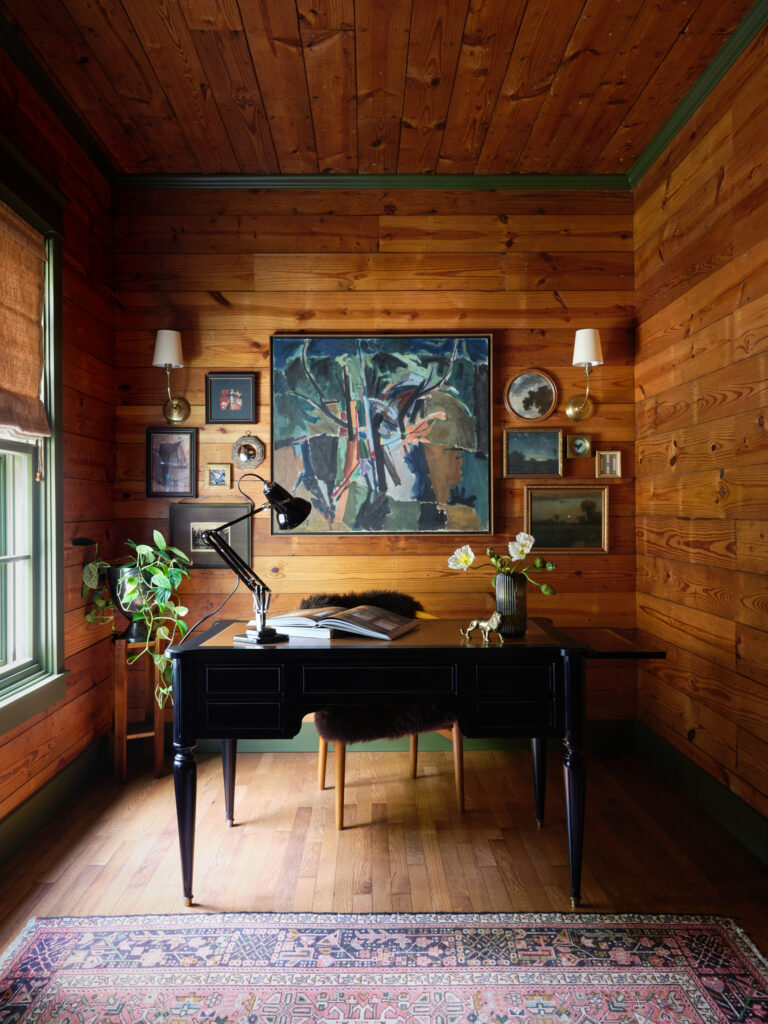
Abstract art in my husband’s office behind the desk
A material you’re always drawn to?
Marble
Pattern or solid?
Pattern
Moody or light-filled rooms?
Moody
A design rule you love to break?
Matching
Best part about living in Hyde Park?
All Day pizza!
Where do you go in Austin when you need inspiration?
Casa de luz followed by a walk around Town Lake
Austin in three words?
Creative, eclectic, carefree